
Douglas Fir vs. Pine: Which Lumber to Use for Your Foothill Project


Two boards on the rack at the lumber counter. Same pale color, same straight grain, nearly the same price tag, and a customer holding one in each hand asking the only question that matters: what's the actual difference? The short version is that Douglas fir is usually stronger and holds its shape better, while pine is cheaper and easier to find. The longer version of the Douglas fir vs pine question is the part nobody tells you when you're standing in a big-box aisle 30 miles away: which one you should actually grab comes down to what you're building, whether that's a line of fence posts, a raised bed, a shed, or a hallway full of trim. Here in the Grass Valley foothills, that choice gets decided as much by our weather as by the wood.
Not sure which board your project needs? | Skip the big-box guessing game. Swing through the drive-thru lumber yard at B&C Ace in Grass Valley |
Pull the boards yourself, ask the yard crew, and leave with the right wood the first time.
Is Douglas fir even a pine?
This trips up almost everyone, so let's clear it up first. Douglas fir is not a true pine. It's not even a true fir. Its botanical name is Pseudotsuga menziesii, which roughly translates to "false hemlock," and it sits in the broader pine family, Pinaceae, alongside actual pines, spruces, and firs (Wikipedia). So when someone tells you "Doug fir is harder and has nicer grain than pine," they're comparing two different woods that happen to be cousins.
For a building project, the family tree matters less than how the board behaves. Both are softwoods. Both take a nail and a screw without much fuss. The differences that change your decision come down to strength, stability, cost, and how each one handles weather.
Douglas fir vs. pine at a glance
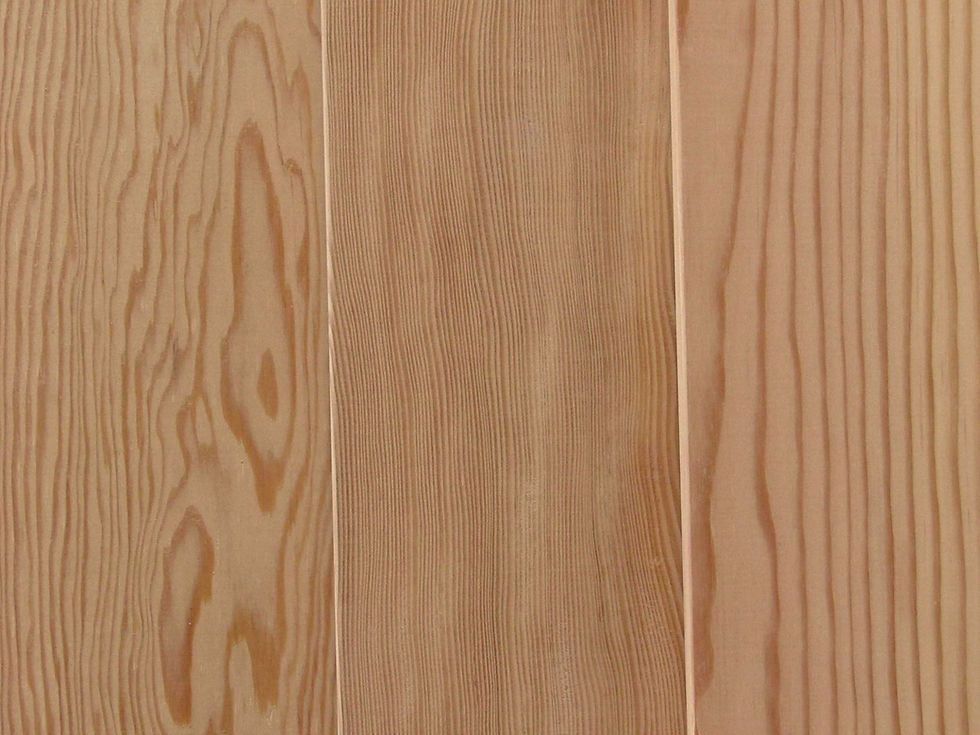
Douglas Fir

Pine
Here's the honest side-by-side. "Pine" covers a lot of species, so the figures below lean on the pine most Western buyers actually encounter on a framing rack (white-wood and SPF), with a note where the strong Southern yellow pines change the math.
Strength and stiffness: Douglas fir is high for a softwood and a go-to structural species; typical white-wood or SPF pine is lower, but fine for non-structural and light framing.
Hardness (Janka): Douglas fir comes in around 620 lbf; Eastern white pine sits near 380 lbf and Ponderosa pine around 460 lbf.
Weight and density: Fir is heavier (roughly 32 lb/ft³); common white pine is lighter (roughly 25 lb/ft³).
Stability: Fir is very stable once kiln-dried; pine is more prone to twist and cup.
Rot resistance, untreated: Fir is slightly better but still not ground-rated; pine is low.
Appearance: Fir has an amber hue, tight straight grain, and fewer knots; pine is paler with more knots and more grain character.
Workability: Fir is harder to hand-tool but holds fasteners well; pine is softer and easier to cut and shape.
Typical cost: Fir runs higher; pine runs lower.
Best at: Fir for structure, straightness, and outdoor framing; pine for budget builds, interior trim, and paint-grade work.
Hardness and density figures above come from The Wood Database. Keep one thing in mind as you read them: averages hide a lot. A grade stamp and how dry the board is will swing real-world performance more than the species name on the bin.
Strength and stability: where it actually matters
Here's where the internet gets sloppy. You'll read "fir is stronger than pine" stated like a law of physics, and it isn't quite true. The strongest pines, the dense Southern yellow pines like longleaf, actually average heavier, stronger, and tougher than Douglas fir. The U.S. Forest Products Laboratory measured exactly that decades ago and the numbers still hold (USDA Forest Service).
So why does Douglas fir win the strength reputation? Because the pine most of us grab off a Western lumber rack isn't longleaf yellow pine. It's lighter white-wood or an SPF mix, and that pine genuinely is softer and more flexible than fir. Compare fir to that pine and fir comes out ahead on stiffness and load.
Stability is the difference you'll feel out here. Kiln-dried Douglas fir tends to stay straight and true after it's milled. Pine, especially if it went up a little green, is more likely to twist, cup, or check as it dries. In the foothills that's not a small thing. Our wood swings through a wet winter and then bakes through a bone-dry summer, and a board that wasn't stable to begin with is the one that comes back to the yard six months later bowed like a banana. If a project needs to stay flat and square, fir gives you a head start.
What you'll actually see at the lumber counter
National articles love to talk botany. Standing at the rack, you mostly want to know what the stack in front of you actually is. A few translations.
"SPF" stamped on a board means spruce-pine-fir, a graded grouping of those northern softwoods sold together for framing. "White wood" is a similar catch-all. Neither tells you the exact species, which is fine for utility framing and exactly why those boards are cheaper. When you want a known structural performer, you look for Douglas fir specifically, often stamped DF or DF-L (Douglas fir-larch).
Then check whether it's green or dry. A board marked KD or S-DRY has been kiln-dried and will move less. The grade stamp matters too: a #2 is your everyday framing grade, while "select" or "clear" costs more for fewer knots and better looks. At our drive-thru warehouse you can pull boards off the stack and sight down them yourself before anything goes in the truck, which beats discovering a twist after you've paid for it. If you want a fuller tour of how the lumber counter and yard work, we walked through it in a separate post.
Which one for your project?
This is the part that actually saves you money, because the right answer changes job to job.
Deer-fence posts and fencing. Start with the rule that overrides species entirely: anything going into the ground needs to be pressure-treated lumber rated for ground contact, fir or pine notwithstanding. Untreated softwood buried in foothill soil will rot, and no species choice fixes that. Above grade, where rails and pickets live, Douglas fir's straightness pays off on a long deer fence because warped rails pull a fence crooked fast. For the posts themselves, buy the ground-contact PT and don't overthink the species underneath the treatment.
Raised garden beds. Here you usually want to skip pressure-treated, since many gardeners would rather not put treated wood next to edibles. Among untreated options, Douglas fir outlasts white-wood pine in a bed, but neither matches naturally rot-resistant species. If the budget allows, cedar or redwood is the longer-haul pick, which we get into in our redwood, cedar, and pressure-treated lumber guide. A practical middle path a lot of foothill gardeners use: build the box from Douglas fir and line the inside with landscape fabric so the soil and moisture aren't sitting directly against the wood. In our heavy clay and decomposed-granite ground, that lining buys you years.
Framing, sheds, and outbuildings. For anything structural, Douglas fir is the standard for a reason. Its stiffness and predictable strength make it the easy call for shed walls, headers, and load-bearing framing. For non-structural work, blocking, utility shelving, a quick workbench, SPF or white-wood pine does the job for less. Whichever you use, match it with the right fasteners, and our hardware and fasteners team can point you to the right screw or nail for treated versus untreated stock.
Decking and outdoor structures. Exposure is the deciding factor. For decking and anything close to the ground, lean on pressure-treated or a naturally durable species, then protect it. How you finish it matters as much as what you buy, which is why we wrote up deck stain versus paint separately.
Interior trim, shelving, and weekend DIY. This is pine's home turf. It's cheaper, softer, easier to cut clean, and it takes paint beautifully. For a paint-grade bookshelf or a trim run that's going to get a coat of primer anyway, paying fir money makes little sense.
Cost, finishing, and a few honest trade-offs
Pine almost always costs less per board foot, and that's the whole point of pine. If a job doesn't demand fir's strength or stability, spending up for fir is money you didn't need to spend. A lot of foothill projects are perfectly happy on pine.
Finishing is closer than people expect. Both species can blotch when you stain them, because softwoods drink stain unevenly. A pre-stain wood conditioner before you start evens things out on either one. And yes, you can absolutely stain Douglas fir; its amber tone actually takes a warm stain nicely. If you're choosing between staining and painting an outdoor build, the stain-versus-paint breakdown covers which holds up better in our sun.
One more honest note on durability: untreated fir is a little more rot-resistant than untreated pine, but "a little more" is not "use it in the ground." For ground contact, pressure-treated is the answer regardless of which softwood is underneath.
Get the right board, cut to size, in Grass Valley
You don't have to guess at any of this in an aisle. Come by the drive-thru warehouse and lumber yard at B&C Ace, pull a few boards off the stack, sight down them, and feel the weight difference between fir and pine for yourself.
If you're not sure which grade or species your project calls for, ask the yard crew; that's what we're here for, and we'd rather help you buy the right board once than the wrong board twice. We can cut to size before it goes in the truck, so you skip the drive across the foothills and skip the second trip too.
Stop by at 2032 Nevada City Highway in Grass Valley, or call the lumber yard and we'll have your order staged.
Frequently asked questions
Is Douglas fir a pine? No. Douglas fir (Pseudotsuga menziesii) belongs to the pine family, Pinaceae, but it isn't a true pine or even a true fir. It's its own species, which is why its grain and strength differ from the pines you'll find on the same rack.
Is Douglas fir stronger than pine? Usually yes, compared with the white-wood and SPF pine most people buy for framing. But the dense Southern yellow pines can match or beat Douglas fir on strength, so "fir is always stronger" is an overstatement.
What's the best wood for fence posts in the foothills? For the posts themselves, pressure-treated lumber rated for ground contact, regardless of species, because untreated wood rots in the ground. Above grade, Douglas fir's straightness makes it a good pick for rails on a long deer fence.
Is Douglas fir worth the extra cost over pine? For structural framing, outdoor builds, or anything that needs to stay straight, yes. For paint-grade trim, shelving, or budget interior work, pine does the job for less.
Can you stain Douglas fir? Yes. Use a pre-stain conditioner to avoid blotching, the same as you would with pine. Fir's amber tone tends to take a warm stain well.
Which holds up better in our wet-winter, dry-summer climate? Kiln-dried Douglas fir is more stable and less likely to warp through the seasonal moisture swing, which is why it's the safer choice when a project has to stay flat and square.


Comments